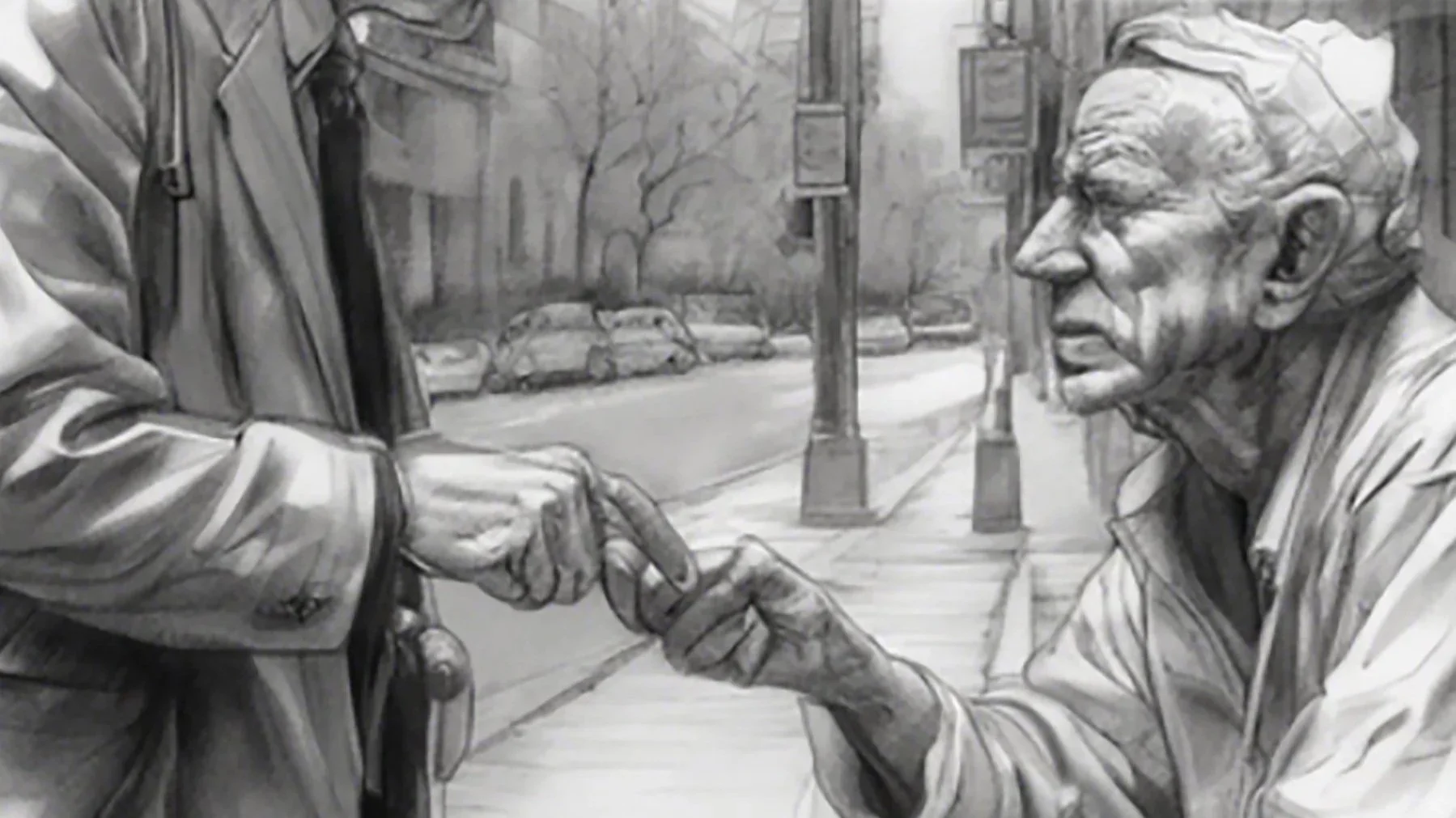
Confessions of a Fool

Confessions of a Fool

H Taylor H Taylor

Book Overview

What if the unknown isn't something to fear, but something to embrace? In this thoughtful reflection, discover how changing your perspective, slowing down, and stepping forward in faith can transform uncertainty into one of life's greatest opportunities.

This reflective article explores the power of perspective, the value of thoughtful advice, and the courage required to step into life's uncertainties. Through personal observations and honest self-examination, the author encourages readers to slow down, reflect deeply, and embrace the unknown with faith rather than fear. At its heart, the piece is an invitation to discover joy, growth, and unexpected possibilities by trusting that even in life's darkest moments, there is something solid to stand on—or perhaps an opportunity to learn how to fly.

Overview
People often say there’s nothing worse than taking advice from a fool, but I still like giving advice to others. I see it as a challenge because advice is a lot like wine. Sometimes it’s just what you need, and other times it’s gone bad. Good advice, like good wine, takes time and care. Even if wine turns to vinegar, you can still use it for cooking, but you probably wouldn’t want to drink it. Advice can be the same way; sometimes it’s helpful, and sometimes it’s not, depending on who gives it and who receives it. Advice is tricky. It can help or hurt, depending on how it’s shared and received. What I really want to say is that advice, when given with care, can encourage people to face the unknown and make bold choices.

I enjoy writing, but I know it’s not always what people want to read. That’s one challenge. Another is the way I write, which can wander like a stream of thoughts. Sometimes readers need more clarity, might lose interest in all my ideas, or feel overwhelmed by where my mind goes. Still, I hope to inspire you to face uncertainty with confidence and strength, and that my thoughts help you find power in the unknown.
Another challenge is staying focused and following through. For a long time, people read slowly and reflected on each line. Now, my generation has learned to jump quickly from one thing to another. Even when I hold a book, I find myself skimming, skipping parts, and rushing, which means I often miss out on really understanding and enjoying what I read.
 
Honestly, I’m writing this to help myself slow down and reflect. Right now, I feel a strong need to do this, and it makes me happy. If you enjoy reading it, I’m glad. If not, I hope you keep searching and find your own joy. Life is tough without it.

Disclaimer 
Some things I say might challenge your views, but I just want to share what I believe. Even if we don’t agree, I hope you find something new or inspiring here. I welcome anyone who is open and curious, and I see every reader as someone full of potential.
 
This time, I’m not trying to promote myself or get more readers. Instead of following the usual path, my writing is more like a hidden still in the woods: quiet and different. It starts simple and grows into something strong. My writing might not be for everyone, but for those who stick with it, it can really make a difference.
 
I hope you will be decisive and powerful—not by your own means, but by recognizing that something beyond your control, something accidental and unpredictable, could be more wondrous than you imagine. 
 
My main goal is to inspire you. I can’t do it for you, but I hope my words encourage you to be bold and realize that the unknown can be full of wonder.
 
I always end with this quote and can’t seem to let it go. Edward Teller was a famous theoretical physicist who was partly responsible for creating the atomic and hydrogen bombs. One of the other legacies he left us is this quote:  

“When you get to the end of all the light you know, and it’s time to step into the darkness of the unknown, faith is knowing that one of two things shall happen: either you will be given something solid to stand on, or you will be taught how to fly.” - Edward Teller. (Edward Teller Quotes, n.d.) 
 
To sum up, I hope this story shows you that even in your darkest moments, you can find something solid to stand on and maybe even learn to soar. My main goal is to help you face uncertainty with faith and confidence. I hope my words encourage you to stand strong and be brave, even when things are unclear.

Read More
H Taylor H Taylor

Chapter One

What if the biggest obstacle to happiness, success, and healthy relationships isn't the world around us—but our own perspective? In this thought-provoking chapter, H. Mark Taylor explores the surprising truth that each of us views life through a limited lens. Through personal stories, humor, and practical insights, he challenges readers to recognize the "fool" within themselves before judging others. Discover how pride, self-justification, and certainty can blind us to reality, while love, humility, and grace open the door to deeper understanding and stronger relationships. This engaging reflection invites readers to examine their assumptions, listen more carefully, and embrace a perspective that leads to greater wisdom and personal growth. If you've ever found yourself frustrated with other people, convinced you were right, or struggling to see beyond your own experiences, this chapter offers a refreshing and honest look at what it means to grow in wisdom and live with greater compassion.

Chapter One
There is a saying that a fool is born every minute. While most people would find this attribution offensive, I take great delight in it. It's a sentiment that I'm sure many of us can relate to. There was a time in my younger years when I would have seen the title demeaning. However, the older I get, the more I appreciate it. If you have never had the grand experience of being labeled as a fool, stupid, or an idiot, I highly recommend it. There is nothing like a good put-down to provide a solid foundation of humility. Although unpleasant, humility is a crucial ingredient to living with ourselves and others.
 
"You're an IDIOT!" 

Truer words were never left unsaid. They didn't need to be spoken. Somehow, I knew them by heart and was never short of repeating them in my mind. I never heard my mom or dad tell me I was an idiot. Dad would talk about other people that way, but I don't remember him saying that to me. Yet, all these years, those are the words in my mind about me and, if I'm honest with you, about other people too. This internal dialogue, shaped by my father's words and my own self-criticism, has been a constant companion throughout my life. 
 
The other day, I was driving down the road when a high-end black sedan pulled up right behind me. Then it whipped around, cut in front of me, and continued to weave in and out of traffic. I didn't slam on the horn or make any gestures. I'm kind of past that at my age, and it takes more energy than I'd like to expend. I just shook my head and, in a calm voice, said, "You're a stupid idiot." 
 
The truth is, we've all been in a hurry and made similar mistakes. It's easy to point fingers, but we're often just pointing at ourselves. That's the funny thing about perspective. We can justify our own actions, but when someone else does the same, they're just an idiot, right? It's a universal experience, isn't it? 
 
The world is full of people who have determined that they know better than everyone else and are qualified to tell you what you should think and how to live your life. I'm no exception; neither are you if you look deep enough. Sometimes, I have the opportunity to meet people who seem demure, quiet, and humble. Yet, as we get to know each other, it becomes evident that they have very concrete ideas about life, themselves, me, what is right and wrong in the world and society, and what everyone else should be doing and thinking. It makes sense. Even though none of us is the center of the world, we are, by default, the center of OUR world. How can we be anything different when we are more or less trapped within our own perspective? 
 
The core issue is that each of us is, in a way, trapped within our own consciousness. Our brain records what happens to and around us and filters it through our personality and experience to make sense of it. There are some things that we may all agree on. It's raining outside. A dog is barking. I have a headache. We may agree on things we can validate, such as math and language. But when it comes to opinion, emotion, and thought, that's a different matter. Sometimes, the best we can do is to agree, disagree, and work together. However, as we see all too often, we can't even agree to disagree. We want to make our point. 
 
The other day, my wife and I hosted a 4th of July lunch. A couple of our guests began conversing about math, the laws of physics, and life. When you think about it, it makes sense. Marius and Keith both have excellent brains for higher-end mathematics, and they hit it off. Keith typically wouldn't even show up at our gathering, but I asked him to help move a refrigerator, so he was tricked into coming. After the move, he turned toward the door to leave, but Marius began asking him questions, and the conversation somehow degenerated into a discussion of math and how it shapes society and life. 
 
The main idea was that communication is only possible with basic laws. Even language and thought are determined by rules and laws. For instance, a sheet of music can be written by someone in a different country, in a different language, at a different time, and with a different ideology, yet be played centuries later without concern. We only need to understand the rules of music, where a C is a C is a C. 
 
Their conversation made me think about the devolution of society. We may argue about whether we like a particular song or whether it is good or bad, but that is a matter of preference. However, what if we determine that because we don't like a particular song, there is something wrong with the rules of how music is written? This analogy can be extended to societal norms and rules. Let's change society's structure entirely, and if anyone disagrees, we will block them and call for their destruction. After all, if we are going to make real change, we need to eliminate anyone who disagrees with us, don't we? That is where society is today. 
 
In the times we hide behind our protective walls and shoot at everyone outside, we are demonstrating that we are no more than fools. When a mother or father sings to their small child, they don't care about the song's structure or how it looks on paper or on a screen. Reasoning and a reasonable structure in our brains and bodies make music possible. There is something built within us that understands love yet learns to hate. Something deep within yearns for acceptance but retreats into loneliness. 
 
That's only my thought about it. This may not be true because remembering that I, too, am that fool, thinking myself wiser than I am, or why else would I even attempt to write this? Here are some other thoughts about people whom we might judge as fools: 
 
Fools do not desire to learn; instead, they give their opinions. Only a fool rejects wisdom and sound advice. Fools always think they know what is best. It's stupid and embarrassing to answer before you listen. 
 
There are three overriding factors in this. 
Love 
Humility 
Grace 
 
Love overcomes a multitude of sins, which, in this day, we may refer to as 'shortcomings.' The words " Love and Shortcomings " require some explanation. A fool is interested in only themselves, not others. In this case, love refers to the person who has to put up with a fool. It takes patience, kindness, and self-control to tolerate a fool. Just ask my wife or daughter.
In some cases, boundaries are necessary, and some amount of control is required. Allowing a fool to blather on and damage relationships does no good. Ask me how I know this.
The word “Shortcoming” is a new word for what folks used to call “Sin”. When hearing the word " sin, most people put it in a religious context, slam the door, and try to throw away the key. The problem is that the key is securely fastened around each person's ankle and tends to show itself at the most inopportune times. The door doesn't have a lock anyway, and the dungeon where we lock away things we don't like is in our mind; it is internal, not external. Those awful little rats scurry right out of that dark, dank dungeon and quickly find their way into our everyday lives for everyone to see. It's rather embarrassing, to say the least, and all kinds of reasonings and excuses blow into the air as we try to shove them back down into the cellar. 
 
"Oh my goodness," (really… "goodness"? That's an antonym right there), "where did that come from? Maybe the people next door aren't keeping their yard up, so all those rats scurry over here." 
 
That is how we explain away our shortcomings or Sin. By default, we blame it on someone else, some circumstance, anything but ourselves. If we take responsibility and address it, it won't be an issue, or at least not as much of an issue. Owning the truth doesn't magically eliminate all our problems; it may create more. I realize that some people reading this would like more details, but it is a matter of individual understanding. Therefore, I invite you to explore the dark labyrinth of your own mind. You will find the most amazing and entertaining stories of your own making there. 
 
I kind of hate to jump down into this rabbit hole, but I think I will anyway. In talking about the things in our minds that we would never share with anyone else, have you ever heard of those famous people who author some of the most awful yet entertaining books? I name no names here. These are books detailing horror, sex, rape, murder, and the most disgusting, shocking depths of human depravity. The authors make a lot of money from this. Remember that these are fictional stories, and I am emphasizing the word 'fiction': they are make-believe, not real. Ordinary folks like you and me would line up to meet these famous authors and get their books signed. They are on the best-seller list. Yet, we don’t seem to think about where all that dark fiction and sewage ideas come from. I'll leave it at that. 
 
Humility is one of the best defenses against becoming a fool oneself. Yet, humility is very elusive and rarely seen or acknowledged. It is a funny concept. Not funny, "Ha, ha," but funny as in odd. While a fool is concerned mainly about their own self and letting everyone know how wonderful and wise they are, humility covers foolishness like a wet blanket smothers a fire. A person may be known for being humble, but the moment they acknowledge it, they are no longer humble. A person who says, "Oh, I'm not humble at all," probably is not. On the other hand, the person who says, "I'm known for my humility," or "I'm a very humble person," is not. It works against us both ways. Any focus on humility vaporizes it into a mist, poisoning the person within its acidic cloud. 
 
Would you like to appear humble and wise to other people around you? Learn the art of listening without running your mouth incessantly or trying to think of an answer to the conversation. You will be surprised at the level of difficulty. Silence takes much practice because we love to talk about whatever is on our minds, not what others may think. Being completely quiet and staring at someone is unnecessary; they may think you are a fool. Be engaging by listening and processing what they communicate without judging their motives. The judging can come later, out of earshot. :-) 
 
Here are some sample responses: 
"Mm hmmm… Really? I see… Hmmm, that's interesting… Tell me more… What makes you think that?" 
 
You get the idea. No matter how much you dislike what is communicated or how it may offend you, smile, nod, ask a question, or excuse yourself. People will begin to see you in a different light, bringing us to the practice of grace. 
 
Grace is the simple yet beautiful bow on the gift wrapping. It's a fragrant flower in the moonlight, the gentle breeze on a lake, the majesty of mountains in the distance. The princess enters the room with her entourage, and it is she we see as everyone gasps at her beauty. It is the bride entering as everyone stands in respect of her wedding. For it truly is her wedding, not his, that we celebrate. At that moment, we recognize her grace and beauty. She may not have been a person of grace, nor ever will again, but for that moment, she is. 
 
Grace extends kindness in the face of transgression, restraint in a rebel's presence, and indulgence with a fool — not too much indulgence, but enough to be recognized as grace. In all her regality, the Queen smiles, nods, and proceeds to her destination without repercussion. 
 
Grace found me when I began to recognize that I was the one in need of her. It was the beginning of humility, realizing my failure to love or listen to anyone outside my own perspective. We are all in love with ourselves in one way or another. The story of Adam and Eve leads us to conclude that what they lost for us was the ability to see each other and God the way they are. Instead, we are relegated to thinking only about ourselves and fear the one who crafted us into the most majestic, crowning creation of all. 

Read More
H Taylor H Taylor

Chapter Two

This article is a thoughtful reflection on the lifelong search for worthiness, happiness, and acceptance. Through personal stories, childhood experiences, struggles with self-worth, and lessons learned over decades, the author challenges the common belief that our value comes from achievement, appearance, or performance. Instead, he explores the Christian perspective that true worth is a gift from God rather than something that can be earned.

Drawing on biblical teachings, particularly Jesus' parable of the "unworthy servant," the article invites readers to reconsider how they measure themselves and others. It emphasizes that lasting peace comes not from proving our value, but from accepting God's grace, love, and acceptance. Ultimately, the piece encourages readers to listen deeply, let go of the need to earn worthiness, and embrace the freedom that comes from understanding that their value has already been given.

Today, there’s a lot of focus on how we look. When I was growing up, people cared more about my appearance than how I actually felt.

“If you don’t smile, your face will freeze like that!”

People said this because I was always frowning, and they didn’t like it. Another thing I often heard when I got in trouble was:

“Wipe that smile off your face!”

It doesn’t make much sense, does it? People couldn’t decide what they wanted. No one ever asked, “Hey, Mark, why are you frowning? Are you okay?” I don’t think they meant to ignore my feelings; it just never crossed their minds to ask. They figured I’d grow out of it, which is what our pediatrician always said.

Mom: “Doctor Smith, my son’s spine seems to have some curvature.”
Dr. Smith: “Oh, he will grow out of it.”

But I never did.

Mom: “Doctor, he doesn’t like being around other kids, he seems reclusive, he likes to read books incessantly, he won’t eat his peas, he argues with his brother…”
Dr. Smith: “Oh, he will grow out of it.”

Nope. I do eat peas now and actually like them, but I kept arguing with my brother—may he rest in peace.

Mom: “Mark has allergic reactions and asthma.”
Dr Smith: “Oh, he will grow out of it.”

Actually, I finally did… at age 40!

I used to be allergic to almost everything: bananas, milk, rye, dust, pollen, flour, tomatoes, animal dander, bird feathers, cats, dogs, and cigarette smoke. Back then, everyone smoked cigarettes, cigars, or pipes. Marijuana and meth weren’t common. People would pass around a pack of cigarettes and a lighter as if it were a tradition. At home, nobody quit smoking, even when the doctor said to, and we always had a dog but never a cat. Then, in December 1996, my allergies just stopped. I’m not sure why. Maybe my body changed, maybe I just got tired of it, or maybe God healed me, that’s what I usually say, but honestly, I don’t know. Now we have two German Shepherds and three cats, and one of the German Shepherds likes to sit on my lap. I’m careful not to touch her and then rub my face or eyes, but it doesn’t seem to bother me anymore. Years ago, I couldn’t even be in the same house as a cat without sneezing, coughing, and getting swollen eyes.

For a long time, I struggled with feeling unworthy. It took me years to accept it and try to act 'normal,' whatever that means. As I said before, everyone has advice on how to feel better or fix yourself.

I’ve always loved reading, and as a kid and teenager, I spent more time with books than with people. Books let me escape into other worlds, like being a cowboy or a starship captain. In my teens, I read about psychology, different religions, and happiness, but none of it fixed my own unhappiness. I thought finding the right person would make me happy. It took a ten-year marriage, fourteen years divorced, and over twenty years in a second marriage to realize I was wrong about happiness. I learned this slowly; old habits are hard to break.

If you look up 'How do I feel worthy?' online, you’ll find plenty of advice. Much of it is helpful, but I want to share a main idea: the best way to feel worthy is to realize we can’t do it on our own. That might sound strange, but it’s really what I’m getting at. Many of us spend a lot of time and energy trying to feel worthy, but maybe the answer is simpler than we think.

There is an often-overlooked story about the unworthy servant.  
“Suppose one of you has a servant plowing or looking after the sheep. Will he say to the servant when he comes in from the field, ‘Come along now and sit down to eat’? Won’t he rather say, ‘Prepare my supper, get yourself ready, and wait on me while I eat and drink; after that, you may eat and drink’? Will he thank the servant for doing what he was told to do? So you also, when you have done everything you were told to do, should say, ‘We are unworthy servants; we have only done our duty.’ ” (Luke 17:7-10) https://my.bible.com/bible/111/LUK.17.7-10

It’s interesting that in the Bible, Jesus challenges what we usually believe about worth. Society cares a lot about looks and achievements, but Jesus tells us to focus on our hearts and intentions. This shows that our value isn’t about success or image, but something deeper that isn’t based on what we do.

Because of this, it’s understandable that many people try to follow Christ and do what the Bible says, hoping it will help them feel better about themselves or even earn a place in heaven. But Jesus actually sees things differently, and that’s a key part of Christianity. I’ll talk more about that soon.

This shows something we all do: we want to achieve, improve, and prove ourselves. We judge almost everything by performance, where you went to school, where you live, and what job you have. But Christianity isn’t like that. When Jesus taught in the Middle East, he told stories that challenged what people thought they knew. That makes sense, because if God is real, he probably sees things differently than we do.

The Bible says there’s nothing we can do to earn God's favor. That chance was lost with Adam and Eve. Now, we’re stuck in a world full of rules and expectations. Imagine a stranger shows up and talks about a place where everything is right, no pain or sorrow. How do we get there? The traveler says we can’t find it, then says we can. It feels impossible. Should we search Google for answers about our worth?

It’s tough to accept that we can’t earn worthiness on our own. I’ve done good things; shouldn’t that matter? But that’s still thinking in terms of performance, not what I’m trying to say. According to Jesus, God judges us differently. He doesn’t measure our worth by what we do, believe, or try. The main point is this: our worth is a gift, not something we achieve.

Think about how you give a gift to your child or a friend. Do you only give them something if they deserve it? Maybe sometimes, but usually, if you really care about them, you want to give the best and most thoughtful gift you can.

This reminds me of a personal story. One Christmas morning, I was sitting by the fireplace with my daughter and family. We didn’t have much money, and I’d told my daughter I couldn’t afford expensive gifts that year. On top of that, I had just totaled my car. Before that, I could barely afford gas, let alone a new car. Thankfully, my brother let me use his old yellow car, which ran but burned a quart of oil a day and left a trail of black smoke. I tried to drive it gently to keep the fumes down, but people still yelled at me to “get it fixed!” I wanted to yell back, “Hey! Pass over a little cash if you don’t mind!”

That year, my daughter wanted a certain game, but it was too expensive, so she didn’t expect to get it. After we’d opened all our gifts, I said, “Wait, there’s one more.” When she unwrapped it, I’ll never forget her face; she was shocked, amazed, and even cried a little. She hugged me and said, “Oh, Dad, how did you do this? I can’t believe it; thank you so much!” I had worked extra, sold some things, and did whatever I could to surprise her. It didn’t matter how she’d acted; I gave her the gift because I love her and wanted to do something special. That’s how I think God treats us, too.

This challenges the way we often think of God. We imagine Him as a strict judge, seated at his court desk, waving his gavel around, occasionally smacking us when we get out of line, and ready to punish us when we mess up. But Jesus actually tried to correct that idea. Did you know that God cares about you so much that he even knows how many hairs are on your head? If you know how to give good gifts to your own children, imagine how much more your heavenly Father can do. He owns everything and created all the stars.
When it comes to God and our worth, most of us are happy to accept his generous offer and feel good for a while, but then we forget. The truth is, it’s a gift we can’t earn or expect. Still, it’s easy to slip back into old habits and try to earn favor we already have. That’s why the story of the unworthy servant matters. Even after doing everything right, he says, "I am still unworthy; I have only done everything I could and nothing beyond."

The Bible says again and again that true goodness isn’t in us, and even our best efforts don’t earn us God's favor. Jesus points out that the Old Testament laws show we can’t be perfect by what we do. The main point is: we can’t reach perfection on our own; the answer lies elsewhere, not in our actions.

But there’s still hope. One day, we’ll live in a place of real joy and happiness, with no pain or sorrow, even if it’s hard to understand now. The gift is free, you can’t earn it, but it will cost you everything. That sounds confusing, I know. It’s not about your performance, but how you live still matters. So, is it based on what you do or not? The answer seems to be both. Some people will be included, and some won’t. God, who is beyond time and space, already knows who those people are.

It’s natural to want to argue: "That’s not fair. We should get a choice. Who would turn down an offer like that?"

But the truth is, everyone would say no.

The Bible says we don’t even try to listen, and even if we wanted to, we couldn’t hear it. Have you ever tried to tell someone something they didn’t want to hear? Let me tell you a story to explain.

Joe was married to a wonderful person for twenty years and had four kids of different ages. One day, he decided to leave his family and start something new with a co-worker he’d met a few months before. Joe and I had been friends for years, so this was really out of character for him. He thought I would support his choice to "Be Happy," but I didn’t. We had many long talks, but Joe always blamed everyone else for his unhappiness, never himself.
(Joe is not the real name and represents probably at least ten people I know who did the same thing.)

Over time, I noticed that when someone agrees with you at first but then returns to their old complaints, they’re not really listening. In that moment, they can’t hear you because they don’t want to change. Nothing you say will make them want to. That’s just what I’ve seen.

Maybe this isn’t a perfect example, but you’ve probably had a conversation where you just couldn’t get your point across. I’ve been on both sides, sometimes talking, sometimes not really listening. Honestly, I’ve probably done more ‘not hearing’ than talking. Sometimes we just can’t get out of our own heads to understand someone else.

Jesus understood this, too. He said things like, "Those who have ears to hear, let them hear," and, "Your ears are stopped up so that you cannot hear or understand." Once, after Jesus told some stories, his disciples asked, “Why don’t you just say what you mean instead of speaking in riddles?” His answer was challenging:

“You are permitted to understand the secrets of the Kingdom of Heaven, but others are not. More understanding will be given to those who listen to my teaching, and they will have abundant knowledge. But for those who are not listening, even their little understanding will be taken away. That is why I use these parables. For they look, but they don’t really see. They hear, but they don’t really listen or understand. This fulfills the prophecy of Isaiah that says,
‘When you hear what I say, you will not understand. When you see what I do, you will not comprehend. For the hearts of these people are hardened, and their ears cannot hear, and they have closed their eyes so their eyes cannot see, and their ears cannot hear, and their hearts cannot understand, and they cannot turn to me and let me heal them.’
But blessed are your eyes because they see, and your ears because they hear. I tell you the truth: Many prophets and righteous people longed to see what you saw, but they didn’t see it. And they longed to hear what you hear but didn’t hear it.”

I think the lesson here is that if you really want to understand, you have to truly listen.
To sum up, I hope you feel worthy not by trying to convince yourself, but by realizing that worthiness is a gift, not something you earn. There’s a lot more I could say, but I’ll leave it here for now.

And to finish Joe’s story, he left his wife and moved in with his new girlfriend from work. He went through a messy divorce that cost him a lot, and most of his salary went to support payments. His new girlfriend wasn’t happy with how things turned out and left him a few months after the divorce. Years later, his ex remarried a great guy, his kids want nothing to do with him, and he’s basically broke. But guess who he blames?

You guessed it—he blames his ex-wife.


Read More
H Taylor H Taylor

Chapter Three

We all have moments when our minds drift to the past and whisper, "If only..." If only we had made a different choice, said different words, or taken a different path. Regret can become a heavy burden that steals our peace and keeps us trapped in yesterday's pain.

In this thoughtful reflection, H. Mark Taylor explores how true joy is not found in rewriting the past but in changing our perspective. Drawing from the life of Joni Eareckson Tada, biblical accounts of Lazarus and Martha and Mary, and personal observations about faith and suffering, the article examines one of life's deepest questions: How do we find peace when circumstances cannot be changed?

Rather than focusing on the miracle we wish had happened, this article invites readers to discover a different kind of miracle—the ability to release regret, embrace God's presence, and experience joy today. Through faith, prayer, and a renewed perspective, even life's greatest disappointments can become opportunities for growth, peace, and deeper understanding.

A small change in perspective can transform how we see our past, our present, and our future.

If Only: Finding Joy Beyond Regret 

IF ONLY... 

You can fill in the blank.

IF ONLY I didn’t do what I did.
IF ONLY I did something different.
IF ONLY I had chosen differently, or not made that choice at all.

Sometimes, instead of saying "if only," we say "I wish." Maybe you’ve thought, "I wish I hadn’t..." or "I wish things had turned out differently..." When these thoughts stick around, I get distracted. Out of nowhere, I’ll remember an ad for term life insurance.
One ad I remember says, "For the best term life insurance, call Big Lou. Big Lou is like you! He's on meds too!"

Some people think of God like Big Lou, someone you turn to when you need help. Instead of making a call, we pray. We hope that if we’ve been good and God feels generous, He’ll help us. When we’re in trouble, we often try to fix things ourselves first, then ask others, or even turn to unhealthy habits. Still, the problem often stays, leaving us with regret, loss, or blame.

These thoughts about regret make me think of Joni Eareckson Tada, for whom I often pray. Her family was very active; her dad was an alternate for the U.S. Olympic wrestling team. In 1967, when Joni was seventeen, she made a decision that changed her life. Wanting one last swim, she dove into the Chesapeake Bay, thinking the water was deep, but it wasn’t. She immediately realized that she was injured and unable to move. Today, she is paralyzed from the shoulders down.

After her accident, Joni Eareckson became a leader in disability advocacy and faith. Her journey was hard. I once heard her talk about her darkest days in the hospital, unable to move and wishing she could end her life. She couldn’t, and no one would help. Thankfully, she kept going. Her struggles have helped many people find joy, love, and peace. This isn’t simple, and I don’t want to make it sound easy.

Joni's story brings up a big question for many people: Can God heal? People have different opinions, but I believe He can. Still, many of us wonder why healing or happiness doesn’t always come to us or those we love. There’s no simple answer. It’s one of the main mysteries of faith and pain.

To illustrate further, there’s a story in the Bible about Jesus raising a man named Lazarus, who had been dead for at least four days. If we believe the story, Lazarus wasn’t just sleeping; he was really dead, with no breath, no heartbeat, nothing. Jesus went to the grave, a cave with a stone in front, spoke to a crowd, and Lazarus came back to life.
Let’s stop and think about this. Lazarus wasn’t the only person who had died; others died in places Jesus visited, too. Why did Jesus choose Lazarus and not someone else? Wouldn’t people want Jesus to do the same for their loved ones? I know I would. There’s also the story of Jesus at the Pool of Bethesda, where many people with disabilities hoped for healing. He chose someone who had been sick for thirty-eight years. Why that person? It’s still a mystery.

Since Jesus’s time, people have shared many stories about miracles. Some people make money from these stories, and amazing tales, like those about Area 51, grab our attention. Some believe these stories, while others try to prove them wrong. Either way, they entertain us. When it comes to miracles, even recent ones, there’s often not much evidence. Many people try to explain miracles as myths or science. If someone was dramatically healed, shouldn’t there be some medical proof?

After all this, remember that I’m not an expert. Take what helps you and leave the rest. If God is real and loves us, as the Bible says, then miracles should still happen. Just because I haven’t seen one doesn’t mean they aren’t real. I haven’t visited many places people talk about, but I still believe they exist. I believe George Washington was real, even though I only know about him from what others say. I think the Earth is round, not flat. Sometimes, I believe things based on what others report.

What if the miracle you’re hoping for isn’t a dramatic healing, but the ability to let go of your "IF," your wishes, your regrets, and your sorrow, and replace them with "JOY"? Not someday, but right now, today. This change is possible, and I’ve experienced it. I’ll share what I’ve learned to help you find it too.

This is just my perspective, and I can’t say if it will work for you, but I’ve relied on it many times. Here’s some background to help explain. In the Bible, God protects those He loves and corrects them when they go off track. But whenever people take the time and effort to reach out to God and look for His guidance, He never seems to let them down. It’s like someone hoping their loved one will return their feelings. Even a small change of heart can make that person run to embrace their beloved.

I know some people see God as harsh or destructive. But when I look at history, society, and the Bible as a whole, I don’t see it that way. That’s just my view, and you might not agree. Still, I encourage you to read the whole story before making up your mind or believing what others say.

Here’s the main point. If God is real, as the Bible says, then He cares deeply about you and wants you to put aside your phone, iPad, television, sports, and entertainment to focus on Him. You can call it prayer, meditation, a conversation, or whatever you like. By doing this, you might experience something God offers that you don’t have yet: Love, Joy, Peace, Patience, Kindness, Goodness, Faithfulness, Gentleness, and Self-control.

Lazarus’ sister Martha was busy making a meal for everyone, while her sister Mary was in the other room with people listening to Jesus. Martha was frustrated that her sister wasn’t helping her and told Jesus about it. His reply was not what she expected.

“Martha, you are concerned about many things, but Mary has chosen the better part.”
Have you noticed that people who are always busy often have less peace and joy in what they do? They might feel frustrated, bitter, angry, or upset. The answer isn’t to take a pill, have a smoke, sip a drink, or just try to relax. Talking to someone might help for a little while, but nothing outside of us can really fix the behaviors or memories causing our stress. 

Usually, we need to change what we do. As for memories, we can’t change them, but we can look at the past differently, maybe from God’s perspective instead of just our own.
Have you ever noticed how older couples sometimes start to look alike after being together for years? In a similar way, the more time you spend with God, the more you begin to understand things that once seemed impossible. You start to see what you couldn’t see before, hear what you couldn’t hear, and feel more joy and strength to handle pain than you ever thought possible. Even a small change in perspective can shift your thoughts, feelings, and outlook.


Read More
H Taylor H Taylor

Redefine Success

It All Begins Here

Confidence doesn’t always arrive with a bold entrance. Sometimes, it builds quietly, step by step, as we show up for ourselves day after day. It grows when we choose to try, even when we’re unsure of the outcome. Every time you take action despite self-doubt, you reinforce the belief that you’re capable. Confidence isn’t about having all the answers — it’s about trusting that you can figure it out along the way.

The key to making things happen isn’t waiting for the perfect moment; it’s starting with what you have, where you are. Big goals can feel overwhelming when viewed all at once, but momentum builds through small, consistent action. Whether you’re working toward a personal milestone or a professional dream, progress comes from showing up — not perfectly, but persistently. Action creates clarity, and over time, those steps forward add up to something real.

You don’t need to be fearless to reach your goals, you just need to be willing. Willing to try, willing to learn, and willing to believe that you’re capable of more than you know. The road may not always be smooth, but growth rarely is. What matters most is that you keep going, keep learning, and keep believing in the version of yourself you’re becoming.

Read More
H Taylor H Taylor

Small Steps Create Big Shifts

It All Begins Here

Confidence doesn’t always arrive with a bold entrance. Sometimes, it builds quietly, step by step, as we show up for ourselves day after day. It grows when we choose to try, even when we’re unsure of the outcome. Every time you take action despite self-doubt, you reinforce the belief that you’re capable. Confidence isn’t about having all the answers — it’s about trusting that you can figure it out along the way.

The key to making things happen isn’t waiting for the perfect moment; it’s starting with what you have, where you are. Big goals can feel overwhelming when viewed all at once, but momentum builds through small, consistent action. Whether you’re working toward a personal milestone or a professional dream, progress comes from showing up — not perfectly, but persistently. Action creates clarity, and over time, those steps forward add up to something real.

You don’t need to be fearless to reach your goals, you just need to be willing. Willing to try, willing to learn, and willing to believe that you’re capable of more than you know. The road may not always be smooth, but growth rarely is. What matters most is that you keep going, keep learning, and keep believing in the version of yourself you’re becoming.

Read More
H Taylor H Taylor

Turn Intention Into Action

It All Begins Here

Confidence doesn’t always arrive with a bold entrance. Sometimes, it builds quietly, step by step, as we show up for ourselves day after day. It grows when we choose to try, even when we’re unsure of the outcome. Every time you take action despite self-doubt, you reinforce the belief that you’re capable. Confidence isn’t about having all the answers — it’s about trusting that you can figure it out along the way.

The key to making things happen isn’t waiting for the perfect moment; it’s starting with what you have, where you are. Big goals can feel overwhelming when viewed all at once, but momentum builds through small, consistent action. Whether you’re working toward a personal milestone or a professional dream, progress comes from showing up — not perfectly, but persistently. Action creates clarity, and over time, those steps forward add up to something real.

You don’t need to be fearless to reach your goals, you just need to be willing. Willing to try, willing to learn, and willing to believe that you’re capable of more than you know. The road may not always be smooth, but growth rarely is. What matters most is that you keep going, keep learning, and keep believing in the version of yourself you’re becoming.

Read More
H Taylor H Taylor

Make Room for Growth

It All Begins Here

Confidence doesn’t always arrive with a bold entrance. Sometimes, it builds quietly, step by step, as we show up for ourselves day after day. It grows when we choose to try, even when we’re unsure of the outcome. Every time you take action despite self-doubt, you reinforce the belief that you’re capable. Confidence isn’t about having all the answers — it’s about trusting that you can figure it out along the way.

The key to making things happen isn’t waiting for the perfect moment; it’s starting with what you have, where you are. Big goals can feel overwhelming when viewed all at once, but momentum builds through small, consistent action. Whether you’re working toward a personal milestone or a professional dream, progress comes from showing up — not perfectly, but persistently. Action creates clarity, and over time, those steps forward add up to something real.

You don’t need to be fearless to reach your goals, you just need to be willing. Willing to try, willing to learn, and willing to believe that you’re capable of more than you know. The road may not always be smooth, but growth rarely is. What matters most is that you keep going, keep learning, and keep believing in the version of yourself you’re becoming.

Read More